Unity AI Gateway is GA. Here is what it changes for data engineers.
One governed door for every agent, model, and tool
Most teams did not plan their AI setup. It grew.
Someone tried a coding assistant. A team shipped a small agent. Another team stood up an MCP server so their agent could read a table. Six months later nobody can answer two simple questions: what are we spending, and what data can these things reach.
That is the problem Databricks is aiming at. On August 4, 2026, Unity AI Gateway became generally available.
What the gateway actually is
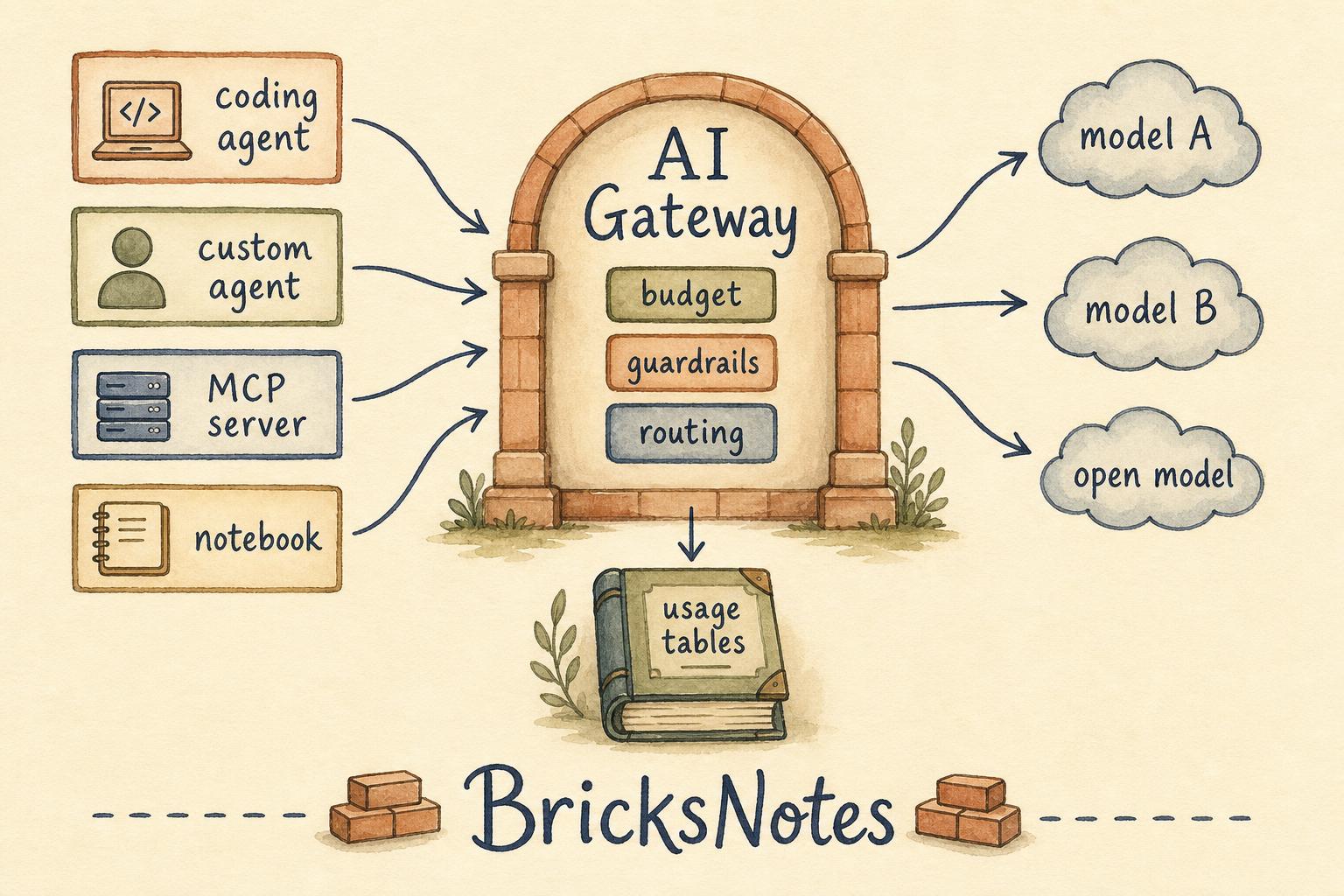
Think of it as one door.
Instead of every agent, notebook, coding assistant, and MCP server calling model providers directly with its own key, they all call the gateway. The gateway forwards the request to the model, records what happened, and applies whatever rules you set.
That single change is what makes the rest possible. You cannot govern traffic you cannot see.
Databricks says over a quadrillion tokens have passed through the gateway in the past year, and customers like Rivian, Asana, and Edmunds already use it. Databricks also uses it internally to manage employee AI spend.
Cost: the part finance actually asks about
AI pricing is not like software pricing. You do not buy seats, you buy tokens. Usage grows quietly and the bill arrives later.
The gateway records usage into Unity Catalog, which means your AI spend becomes a table. Once it is a table, it behaves like any other data problem you already know how to solve. You can group by team, by application, by model, by day. You can build a dashboard. You can ask Genie about it.
Two controls matter here:
- Budgets let you set expected spend per team or project.
- Hard spend caps stop requests when the limit is reached, instead of warning you after the fact.
There is also Smart Routing, currently in Beta. It picks a model per request based on quality, cost, latency, and remaining budget. The idea is to reserve expensive frontier models for work that needs them and send the routine work somewhere cheaper.
That idea is sensible, but treat routing as an optimisation you validate, not a switch you flip and forget. Measure output quality before and after.
Control: agents touch your most sensitive data
An agent is only useful when it can read real data and call real tools. That is exactly what makes it risky.
The gateway sits in the request path, so it can apply runtime guardrails and policies before a call leaves your environment and before a response comes back. Because usage lands in Unity Catalog, the same governance model you use for tables applies to AI activity: identity, permissions, lineage, and audit in one place.
This is the part worth understanding conceptually even if you never configure it. Governing data and AI separately creates gaps. Agent traces alone can contain customer names, internal identifiers, or secrets that never belonged in a log.
Choice: the quiet argument about lock-in
A new model or agent framework lands almost every month. Teams do not want to rewrite integrations each time, and they do not want to be told which model to use.
A gateway helps here because your application talks to one interface. Swapping the model behind it is a configuration change, not a rewrite.
To be fair, this is also a lock-in argument in reverse. You are trading many provider dependencies for one platform dependency. That can still be the right trade, especially when it buys you visibility and cost control you did not have. Just make the trade knowingly.
What the gateway does not do for you
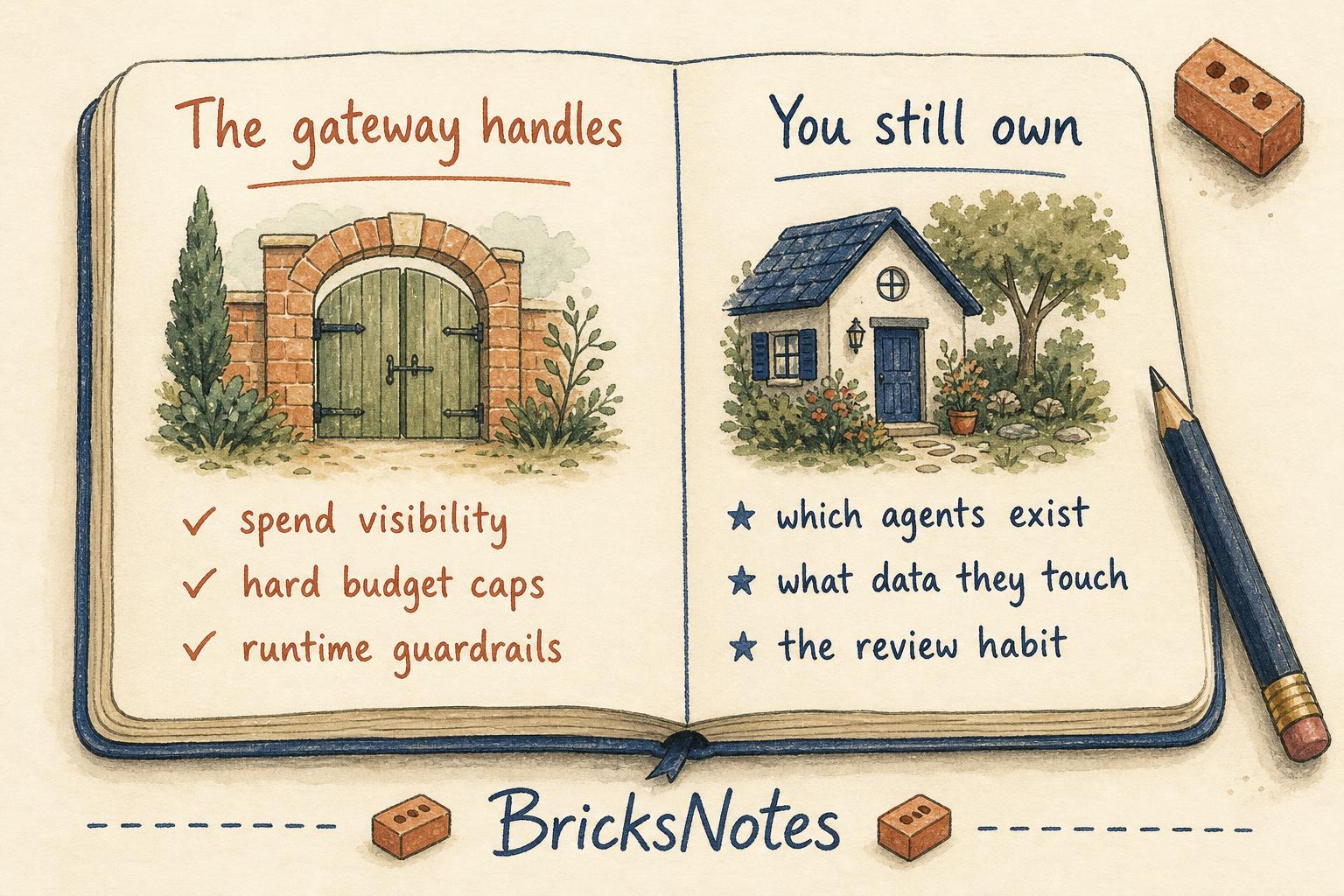
A gateway is plumbing. Good plumbing, but plumbing.
It does not decide which agents should exist. It does not tell you that three teams built the same summariser. It does not know that an agent has read access to a table it has no business reading. It does not review model output for correctness.
Those decisions stay with the people who understand the data. Which, on most teams, is the data engineers.
How to think about this as a data engineer
You do not need an enterprise workspace to get value from this announcement. The useful part is the mental model.
One entry point beats many. The same reasoning applies to ingestion, to service accounts, and to how many places write to your Bronze layer. Fewer doors, more visibility.
Usage data is data. If your platform emits usage into tables, you can answer cost questions with SQL instead of guesswork. That is a habit worth carrying into every system you build.
Governance is a design decision, not a cleanup task. Deciding who can read what is cheap on day one and expensive in month nine.
Every abstraction has a cost. Routing, caching, and guardrails all add a layer between your code and the model. Layers help, and layers also hide things. Know what yours hides.
Unity AI Gateway is an enterprise capability and needs a paid Databricks workspace. The concepts here are explained for understanding, and you can practise the governance foundations in Free Edition today by working with Unity Catalog: catalogs, schemas, grants, and three-part naming.
Where to build the foundation
Governance skills are what make an AI platform usable. Start with the layer everything else depends on.
Our Unity Catalog chapter covers the object model and permissions. The Delta Lake chapter covers the table format underneath it, including how usage and audit tables stay queryable over time. If you want the wider strategic view of cost, control, and choice in the agentic era, we wrote about that in Context, Control, Cost, Choice.
If you are working toward a credential while you learn, our certification comparison shows which path fits your current role.
Continue learning
- Unity Catalog - catalogs, schemas, grants, and three-part naming
- Delta Lake - the table format that keeps audit data usable
- Data Sources - how data arrives before anything governs it
- Context, Control, Cost, Choice - the strategic view
- Thinking in Data Engineering with Databricks - the full book, 29 chapters, Free Edition friendly
Reference: Unity AI Gateway is Generally Available on the Databricks blog.